Jerry Masucci’s net worth is best estimated at about $20 million at the time of his death in 1997. A practical range is $10 million to $40 million, because his wealth was tied to Fania Records, label ownership, master recordings, publishing rights, film projects, concerts, and private assets rather than a publicly traded company.
Masucci should not be mixed with unrelated Hollywood executives, sports-team owners, or movie-studio founders. He was an American attorney, businessman, promoter, film producer, and co-founder of Fania Records, the label that helped take salsa from New York’s Latin music scene to a global audience.

Jerry Masucci quick facts
| Fact | Detail |
|---|---|
| Full name | Gerald “Jerry” Masucci |
| Estimated net worth | About $20 million at death |
| Practical range | $10 million to $40 million |
| Born | October 7, 1934 |
| Birthplace | Brooklyn, New York |
| Died | December 21, 1997 |
| Age at death | 63 |
| Known for | Co-founding Fania Records |
| Main partner | Johnny Pacheco |
| Main business | Salsa and Latin music label ownership, concerts, films, and catalog rights |
| Major label | Fania Records |
| Major group | Fania All-Stars |
| Later catalog owner | Concord acquired Fania in 2018 |
Who was Jerry Masucci?
Jerry Masucci was a Brooklyn-born attorney and music entrepreneur who became one of the most important business figures in salsa. Fania’s own history says the label was founded in New York in 1964 by Dominican-born composer and bandleader Johnny Pacheco and American attorney and businessman Jerry Masucci.
Before Fania became a landmark Latin music label, Masucci worked as a New York City police officer, studied law, and spent time in Cuba while working in public relations. That Cuba period helped deepen his interest in Latin music. After returning to New York, he practiced law and met Pacheco while representing him.
Their partnership worked because Pacheco had the musical ear and artist relationships, while Masucci had legal, promotional, and business instincts. Together they built a label that became central to salsa’s sound, branding, and international reach.
How much was Jerry Masucci worth?
Jerry Masucci was likely worth about $20 million when he died in 1997. The most reasonable range is $10 million to $40 million.
That estimate is based on Masucci’s ownership of Fania Records, his control of related labels and catalog assets, the popularity of the Fania All-Stars, live concert revenue, film projects such as Our Latin Thing, and the long-term value of recordings connected to Celia Cruz, Willie Colon, Hector Lavoe, Ruben Blades, Johnny Pacheco, Ray Barretto, Larry Harlow, Cheo Feliciano, and other major salsa artists.
The range is deliberately broad. Fania was a private company, and Masucci’s estate value was not reported like the market capitalization of a public corporation. The label’s value also depended on contracts, master ownership, publishing rights, royalties, debt, legal claims, and later probate disputes.

Why very high estimates are too high
Huge celebrity-style estimates are not realistic for Jerry Masucci. Fania was culturally enormous, but there is no clear evidence that Masucci had a half-billion-dollar estate when he died.
The better comparison is a powerful independent music-label owner with valuable catalog rights, not a Hollywood studio founder, sports-team owner, or billionaire media executive. Fania’s catalog later remained valuable enough to be reissued, monetized digitally, and acquired by Concord, but that does not mean Masucci personally held hundreds of millions in liquid wealth in 1997.
A multi-million-dollar estimate is reasonable. A claim in the hundreds of millions would need evidence of a sale price, audited estate value, or public company ownership that does not fit the known Fania story.
Fania Records and Johnny Pacheco
Fania Records began in 1964 when Jerry Masucci and Johnny Pacheco started selling records directly to stores and listeners in New York. The label’s first momentum came from Pacheco’s recordings, including the Canonazo material that helped establish the Fania sound.
Masucci’s role was not just passive financing. He helped build the business, promote artists, expand distribution, and turn Fania into a recognizable brand. Pacheco’s role was equally crucial: he was the musical director, producer, bandleader, and creative force who shaped the label’s early sound.
The label’s roster became a map of salsa history. Fania was linked with artists such as Celia Cruz, Willie Colon, Hector Lavoe, Ruben Blades, Ray Barretto, Larry Harlow, Cheo Feliciano, Ismael Miranda, Bobby Valentin, Joe Bataan, and many others.
Fania All-Stars and salsa business
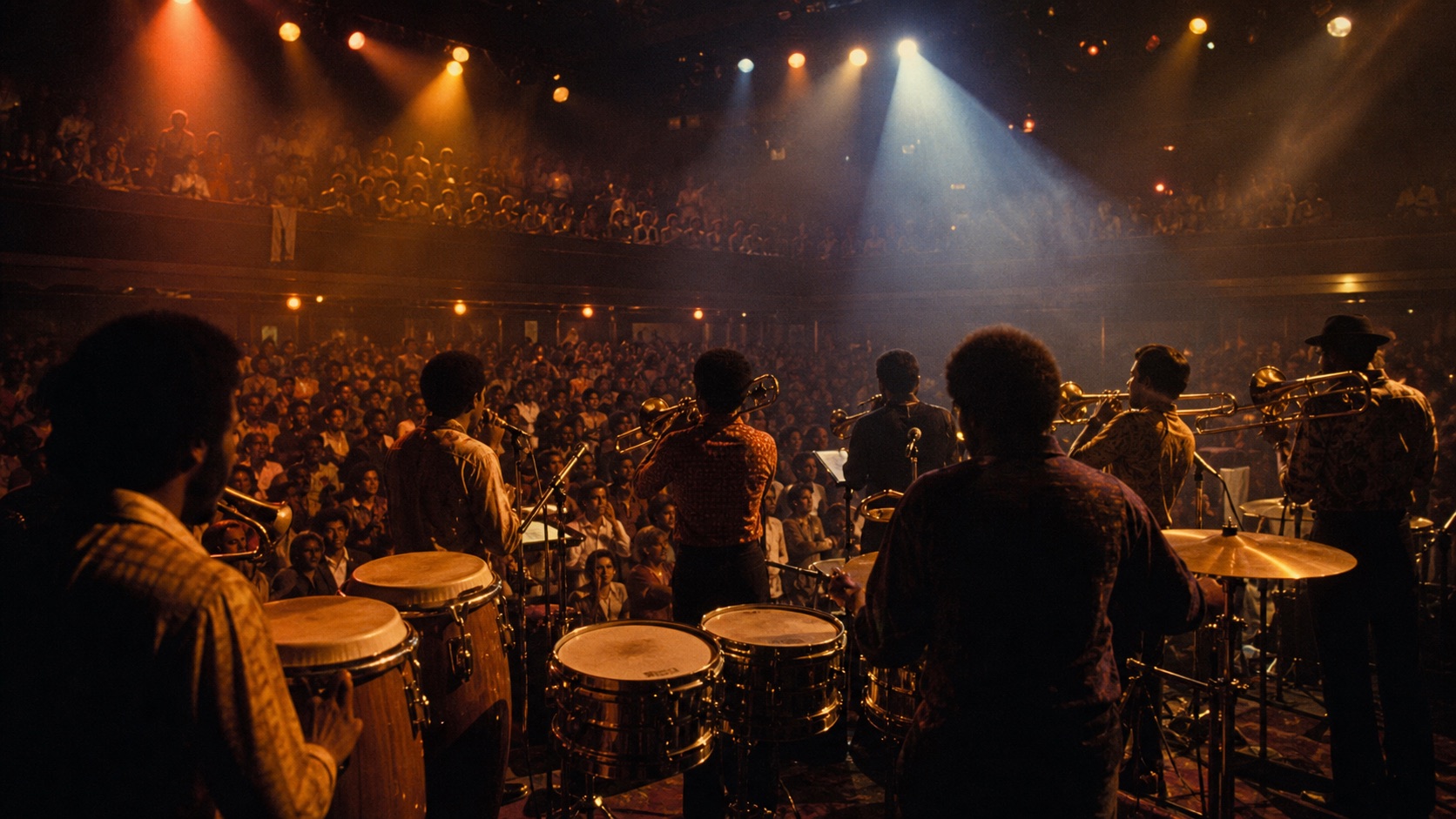
The Fania All-Stars turned the label into something bigger than a record company. The group brought together leading Fania musicians for concerts, recordings, and films that helped define salsa as an international movement.
Fania’s official timeline says Masucci and Pacheco assembled the Fania All-Stars at the Red Garter in 1968, then documents the August 26, 1971 Cheetah concert as a defining salsa moment. The group later played major venues including Yankee Stadium, and Fania concert films and live albums gave the label a media presence beyond ordinary studio recordings.
That combination of records, concerts, films, and artist branding is the main reason Masucci’s estate should be estimated in the tens of millions rather than the low six figures.
Catalog value and later sale
Masucci eventually became the sole owner of Fania Records and connected label assets. After his death in 1997, ownership of the label and catalog became tied up in probate and legal disputes for years.
The assets were later sold in the 2000s, reissued for CD and digital markets, and eventually became part of Concord’s catalog after Concord acquired Fania Records and Publishing in 2018. Concord said the acquisition included about 19,000 master recordings and 8,000 compositions; those master recordings and compositions explain why the brand continued to matter long after Masucci’s death.
That later catalog value supports a strong estimate, but it should not be confused with Masucci’s exact cash wealth at death. Catalogs can grow in value after an owner’s lifetime as streaming, licensing, reissues, and corporate acquisitions change the market.
Age, death, and family
Jerry Masucci was born on October 7, 1934, in Brooklyn, New York. IMDb lists his death as December 21, 1997, in Buenos Aires, Argentina. He was 63.
Reports about his family commonly mention three daughters: Darlene, Misty, and Corinne. His public legacy, however, is mainly business and music history: Fania Records, the Fania All-Stars, and the rise of salsa as a global commercial force.
Common confusion
Jerry Masucci is sometimes mixed with unrelated entertainment executives, sports owners, and studio founders. For this Jerry Masucci, the identity markers are Fania Records, Johnny Pacheco, the Fania All-Stars, salsa, and Latin music catalog ownership.
His film work was connected to the Fania world, including salsa documentaries and concert films such as Our Latin Thing, Salsa, and other Fania-related projects. His identity is Fania Records first.
Bottom line
Jerry Masucci’s net worth is best estimated at about $20 million at the time of his death, with a practical range of $10 million to $40 million. He earned his fortune through Fania Records, salsa catalog ownership, concerts, films, and the long-running value of a label that changed Latin music.